How to Choose a WhatsApp OTP Verification API Provider in 2026: Buyer's Guide
Your WhatsApp OTPs fail silently while support tickets pile up. That delay costs you signups, trust, and revenue every single day. Choosing the wrong verification API provider in 2026 means paying for messages that never arrive.
This guide gives you a practical framework for evaluating WhatsApp OTP verification API providers. You will learn the delivery, security, and integration criteria that separate reliable providers from risky ones, plus how Com.bot measures against each standard so you can make a confident final decision.
What Is Com.bot and Why It Matters for WhatsApp OTP Verification
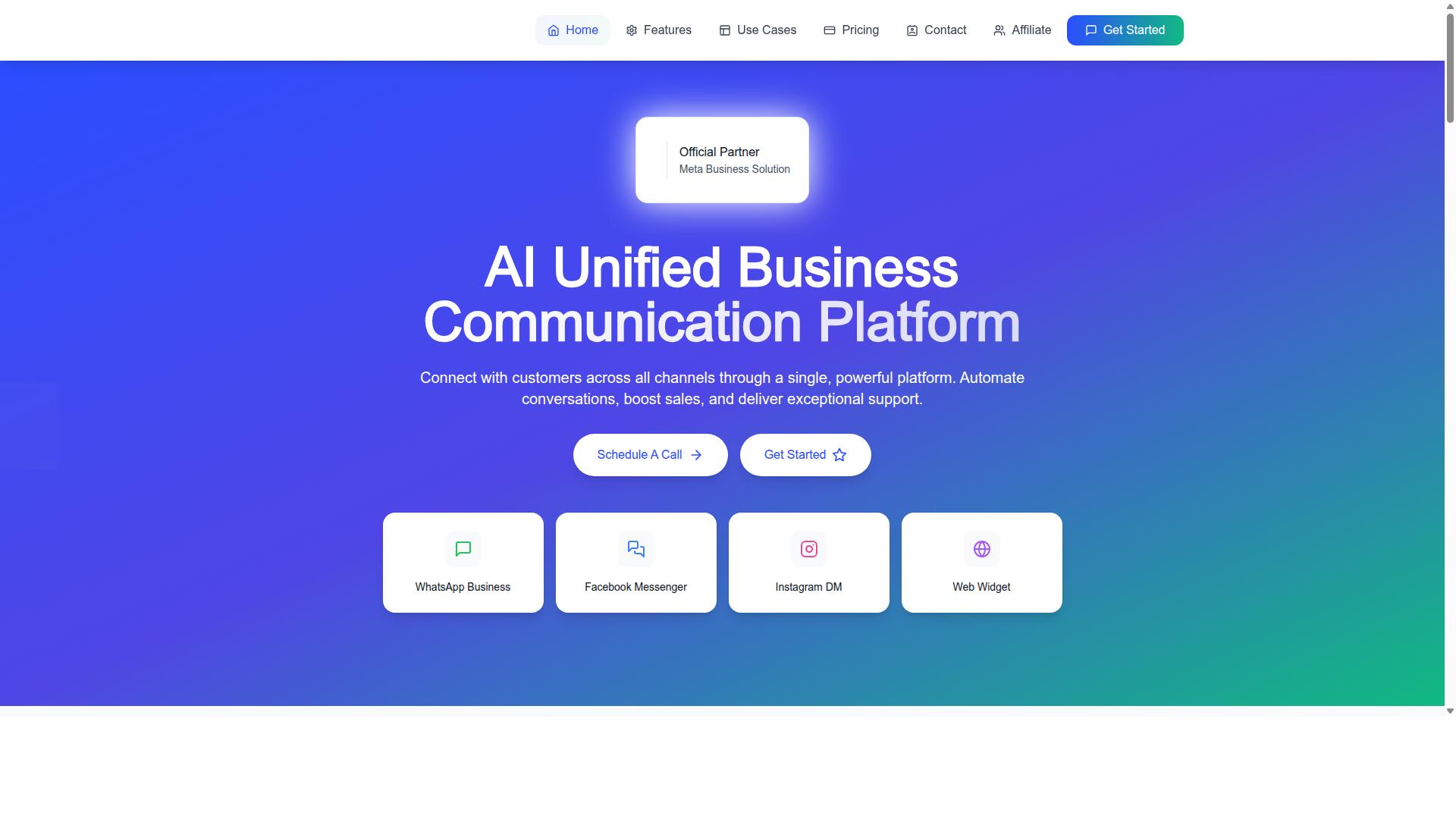
Com.bot is an AI-powered unified business communication platform that enables businesses to send and verify one-time passwords (OTPs) over WhatsApp, leveraging the official WhatsApp Business API. Owned and managed by Com Bot AI Limited, it connects customers across WhatsApp Business, Facebook Messenger, Instagram DM and Web Widget through a single platform.
WhatsApp OTP verification is the process of sending a short, single-use code to a user's WhatsApp number so they can confirm their identity during login, signup, or a sensitive transaction. Because the code arrives inside an app people already trust and check constantly, it tends to feel faster and less intrusive than SMS or email alternatives. For businesses, that translates into fewer abandoned signups and stronger account security.
Reliability is the part buyers care about most. An OTP that arrives late, or never arrives, breaks the login flow entirely and pushes users toward support tickets. This is where Com.bot's position matters: it is an Official Meta Business Partner with direct WhatsApp Business API integration, and it processes 25M+ messages per day. That scale speaks to infrastructure built for steady throughput rather than occasional bursts.
Com.bot also supports multiple channels beyond WhatsApp, which gives teams room to grow. Still, for the purposes of this buyer's guide, the focus stays on WhatsApp OTP verification: what to look for in an API provider, how pricing and delivery metrics compare, and where Com.bot fits into that evaluation.
Who Com.bot Serves and What It Delivers
Com.bot serves a diverse range of businesses, from small startups to large enterprises and government bodies, all seeking to automate and scale their customer communication across WhatsApp, Facebook, and Instagram. The platform is built for organizations that need multi-channel customer support, bulk messaging, order updates and payment collection in one place.
Specific segments stand out. Government bodies are a notable part of the user base, with 100+ served, a group that typically demands strict reliability and clear accountability from any OTP delivery provider. Enterprises and SMBs round out the mix, each with different volume needs but the same underlying requirement: messages that send, land, and verify without friction.
On the delivery side, Com.bot provides a unified team inbox, a visual bot builder, native payments, and multi-channel support. For OTP verification specifically, that combination means authentication flows can sit alongside the same environment where support agents and bots already operate, rather than in a separate tool.
For buyers comparing API provider options in 2026, the practical takeaway is straightforward. A provider's target audience tells you what it has been built to handle. Com.bot's mix of government, enterprise, and SMB customers, combined with its official Meta Business Partner status, points to a platform designed for dependable WhatsApp OTP verification at scale.
Why Com.bot Is a Trusted WhatsApp OTP Verification API Provider
Trust in OTP delivery is non-negotiable, and Com.bot earns that trust through its official Meta Business Partner status, enterprise-grade security, and a proven track record of handling messages at scale.
When a customer taps "send code" and waits for a one-time password, every second of delay or every failed message erodes confidence in your product. That is why the OTP delivery provider you choose matters as much as the app it protects. A weak vendor turns a routine login into a support ticket.
Com.bot has built its reputation on three pillars that map directly to what buyers should demand in 2026. It holds official Meta Business Partner status, operates enterprise security with end-to-end encryption, and processes 25M+ messages per day. Together, these signal a provider that can handle authentication traffic at scale without cutting corners on compliance.
Scale also brings credibility. Com.bot serves 23,000+ active customers, 100+ government bodies, and 500+ global partners, with 100K+ bots created on its platform. Organizations with strict procurement standards, including public sector agencies, have already vetted and adopted the platform.
For anyone working through an API provider selection process, the practical takeaway is simple. A vendor's partner status, security posture, and message volume are observable facts, not marketing claims. Com.bot's numbers are public and verifiable, which makes the evaluation easier.
Official Meta Business Partner Status and Enterprise Security
As an official Meta Business Partner, Com.bot provides direct access to the WhatsApp Business API, ensuring your OTP messages are delivered through a compliant and secure channel.
Partner status is not a badge you can buy. Meta grants it to Business Solution Providers that meet technical and operational requirements, and it unlocks direct API access rather than a reseller's proxy. That distinction affects delivery reliability and how quickly policy or platform changes reach your integration.
Working through an official BSP also keeps you inside WhatsApp's rules. Template approval, opt-in handling, and messaging limits are managed the right way, which reduces the risk of number restrictions or account flags that can interrupt authentication flows.
Com.bot goes further by managing the WhatsApp Business Account (WABA) on your behalf. That removes a layer of setup complexity and lets your team focus on the login experience instead of Meta's onboarding paperwork.
On the security side, Com.bot delivers enterprise security with end-to-end encryption. OTP codes are sensitive by nature, and encrypted transmission protects them in transit. The platform also emphasizes secure data handling and adherence to privacy regulations, which matters for teams in regulated industries.
Two more points round out the picture for buyers. Com.bot offers no markup on WhatsApp conversations, so you pay WhatsApp's rates rather than a padded version, and it provides quick setup and integration alongside real-time message delivery. For a 2026 buyer's guide, that combination of official status, security, and transparent pricing is exactly what separates a trusted provider from a risky one.
Key Criteria for Choosing a WhatsApp OTP Verification API Provider in 2026
Selecting the right WhatsApp OTP verification API provider in 2026 requires evaluating critical factors that impact deliverability, user experience, and operational costs. A one-time password is often the first interaction a customer has with your product, so the provider behind it shapes trust from the very first second.
Not every vendor is built the same. Some focus on low per-message cost, others on global coverage or developer tooling. The right choice depends on where your users live, how sensitive your data is, and how quickly your team can ship.
This buyer's guide breaks the evaluation into three practical pillars:
- Delivery speed, uptime, and global reach, which determine whether codes actually arrive
- Security, compliance, and encryption standards, which protect users and your business
- Integration flexibility and developer support, which decide how fast you go live
Use these criteria as a comparison framework when you shortlist vendors. A provider that scores well across all three is far less likely to become a bottleneck after launch.
Delivery Speed, Uptime, and Global Reach
Delivery speed and reliability are paramount for OTPs, as users expect instant receipt to complete authentication without friction. When a code takes too long, users retry, abandon the flow, or contact support. Latency is a conversion metric, not just a technical one.
Providers should be evaluated on how quickly they deliver OTPs and how consistently they maintain uptime. Slower delivery noticeably increases drop-off during login and checkout flows.
Three infrastructure traits separate reliable OTP delivery providers from the rest:
- Redundant infrastructure across multiple regions, so a single outage does not halt verification
- Direct connections to WhatsApp through official channels, rather than indirect routing that adds hops
- Automatic failover that reroutes traffic when a channel or region degrades
Global reach matters just as much. Coverage varies by country, and some regions have restrictions on WhatsApp message delivery or require specific sender registration. Check whether the provider supports the phone numbers and country codes your users actually use. A vendor with strong coverage in one market may be weak in another.
Before committing, ask providers directly about throughput limits, peak-load behavior, and failover mechanisms. Request their uptime SLA in writing and clarify how downtime is measured and credited.
Security, Compliance, and Encryption Standards
Security is the foundation of OTP verification, requiring robust encryption, compliance with data protection regulations, and secure handling of sensitive authentication data. A leaked or intercepted code can hand an attacker full account access, so this criterion deserves close scrutiny.
Start with transport security. API endpoints should use HTTPS with modern TLS, and OTP messages should travel over encrypted channels end to end. Anything less exposes codes to interception.
Data handling practices matter just as much. Best practice is for providers to avoid storing OTPs after delivery and to rely on ephemeral tokens that expire quickly. Ask how long any message metadata is retained and who can access it.
Compliance is the third layer. Depending on your market and industry, relevant standards may include:
- GDPR for users in the European Union
- HIPAA for healthcare-related applications
- ISO 27001 for information security management
Data residency also matters. Some jurisdictions require that personal data stay within certain borders, which affects where a provider stores and processes information.
Verify certifications rather than taking marketing claims at face value. Request documentation, ask about encryption practices in writing, and confirm how the provider handles breach notification. A vendor that answers these questions clearly is usually the safer long-term partner.
Integration Flexibility and Developer Support
Seamless integration with existing systems is critical, so providers must offer well-documented REST APIs, SDKs in multiple languages, and responsive developer support. The faster your team can send a first OTP in a sandbox, the faster you can validate the whole flow.
Look for SDKs covering the languages your stack already uses, such as Python, Java, or Node.js. A clean REST API with predictable request and response formats reduces custom glue code.
Webhooks and callbacks are equally important. They let your system receive real-time delivery status instead of polling, which simplifies retry logic and monitoring. Support for established authentication protocols like OAuth 2.0 keeps server-to-server calls secure.
Documentation quality is a strong signal of overall vendor quality. Clear guides, working code samples, and a sandbox environment for testing without spending real messages all shorten time-to-first-OTP.
Developer support should also be evaluated. Check whether help is available around the clock, what response times are promised, and whether escalation paths exist for production incidents. A practical way to compare vendors is to measure how long it takes your team to go from reading the docs to receiving a test OTP. That single exercise reveals more about API provider selection than any feature checklist.
How Com.bot Meets Every Selection Criterion
Com.bot not only meets but exceeds the key criteria for a WhatsApp OTP verification API provider, delivering real-time performance at scale and seamless integration. The buyer's guide criteria covered earlier, delivery speed, uptime, security, and developer support, are the same areas where Com.bot concentrates its engineering effort.
Com.bot connects to the WhatsApp Business API and backs it with a Unified Team Inbox, a Visual Bot Builder, and an Automation Builder with 1000+ integrations. That combination matters for one-time password flows because verification is rarely a standalone event. It sits inside onboarding, login, and account recovery journeys that touch other tools.
For teams running a vendor comparison in 2026, the practical question is whether a provider can handle authentication traffic without adding operational drag. Com.bot's answer is a platform built for messaging at volume, with the supporting products and integrations that keep OTP delivery connected to the rest of your stack.
The following subsections break down how Com.bot performs on the two criteria buyers weigh most heavily: raw delivery capability and time to first live OTP.
Real-Time Message Delivery at Scale
Com.bot's infrastructure processes over 25 million messages per day, ensuring your OTPs are delivered in real-time even during peak traffic. That throughput figure is the clearest signal of scalability for an authentication API, because one-time password volume tends to spike in bursts rather than arrive evenly.
A direct connection to the WhatsApp Business API removes intermediary hops that can add latency. Fewer handoffs between systems generally means faster delivery and fewer points where a message can stall. For OTP use cases, where a code may expire in minutes, that difference is felt directly by the end user.
Reliability at this scale depends on more than raw capacity. Redundancy and failover mechanisms keep delivery moving when individual components degrade, so a single failure does not cascade into a wave of undelivered codes. Buyers evaluating an uptime SLA should treat these safeguards as a core part of the reliability picture, not an optional extra.
Com.bot's product set reinforces the delivery layer. Bulk Messaging and Notifications handle high-volume sends, while Smart Chatbots and Customer Support cover the conversations that follow a verification attempt. Together these capabilities support the throughput, delivery rate, and latency targets that belong at the top of any vendor comparison.
Quick Setup and 1000+ Automation Integrations
Com.bot offers a quick setup process, and provides 1000+ automation integrations to connect your OTP verification with your existing stack. Speed to first live OTP is one of the most underrated criteria in provider selection, because every day spent on configuration is a day your authentication flow stays unfinished.
Getting started follows a practical path. You connect through the WhatsApp Business API, then wire OTP sending and verification into your application using the available integrations. Documented endpoints and callback support let your developers test the full flow, from code request to confirmation, before going live.
The Automation Builder extends that reach across your existing tools. Common connection points include:
- Automation platforms such as Zapier and Make
- CRM systems that hold customer records and consent status
- Support and messaging workflows through the Unified Team Inbox
Pricing stays transparent. Costs follow a per-message or conversation-based model rather than a tangle of hidden charges. That structure makes budgets easier to forecast as OTP volume grows.
Com.bot also ships adjacent platforms, including Tasks.Bot for task automations, Tickets.Bot for event ticketing, and Calendars.Bot for appointment booking. For teams that verify users across several products, that breadth reduces how many separate vendors you need to manage.
Com.bot Pricing and Plans for OTP Verification
Com.bot offers transparent pricing with plans starting at $149 per quarter, and OTP verification costs are based on WhatsApp's conversation-based pricing with no hidden fees. For teams comparing an OTP delivery provider in 2026, that combination matters: a predictable platform fee plus messaging billed at cost.
There are three plan tiers to choose from, and each one covers the core WhatsApp OTP verification API capability. The difference lies in capacity, channels, and how much automation your business needs.
| Plan | Price | Best For |
|---|---|---|
| Silver | $149 per quarter | Smaller teams starting with WhatsApp OTP and basic messaging |
| Gold | $349 per quarter (Recommended) | Growing businesses that need broader channel coverage and automation |
| Platinum V1 | $2500 per quarter | High-volume operations with advanced requirements |
The Gold Plan is the recommended option for most buyers. It sits between the entry-level Silver tier and the enterprise-oriented Platinum V1, which makes it the natural fit for a business running regular one-time password traffic across multiple channels.
Add-ons let you expand beyond the base plan without upgrading a full tier. Each add-on is priced at $10 per month, covering items such as an additional team member, a social channel, external actions (per 5000), bot triggers (per 25000), and an ecom store.
Dedicated support is available separately when you need hands-on help. WABA, CRM, and Inbox support is billed at $49 per hour, while Ecommerce, Bots, and Automations support is billed at $99 per hour.
Now for the part most buyers care about: how OTP costs are calculated. WhatsApp charges per conversation, and Com.bot passes those Meta rates through at actual cost with no markup. You are not paying a per-message premium on top of the platform fee.
Consider a practical example. If your business sends 10,000 OTPs in a quarter, your platform cost is the plan fee, and your messaging cost is whatever Meta charges for those conversations at its published rates. There is no separate Com.bot surcharge layered on top.
Equally important, Com.bot does not charge setup fees. There are no onboarding charges, no activation charges, and no hidden charges buried in the billing cycle. What you see in the plan table is what you pay, plus the add-ons you deliberately select.
That structure gives buyers a clean way to model total cost of ownership. Estimate your expected OTP volume for the quarter, multiply by Meta's conversation rate, add the plan fee, then add any add-ons you need. The result is your real budget, with no surprises at invoice time.
For a 2026 vendor comparison, this level of pricing clarity is a genuine advantage. Plans are quoted in USD, and the site also offers an INR toggle, so currency should be verified at the time of purchase if you are billing outside the United States.
Trust Signals: Track Record and Global Adoption
Com.bot's global adoption is evidenced by its 23,000+ active customers, 500+ partners, and presence in over 50 countries. For anyone weighing an OTP delivery provider in 2026, scale like this matters because it signals the infrastructure has already been stress-tested across diverse networks and regulatory environments.
A vendor with a long track record is far less likely to disappear mid-contract or struggle with carrier relationships in unfamiliar markets. That stability directly affects WhatsApp OTP reliability, which is the whole point of the integration.
Com.bot also holds status as an official Meta Business Partner. That designation is not self-awarded. It reflects a direct working relationship with Meta, which matters when you need a WhatsApp Business Account (WABA) approved and a sender ID configured without avoidable delays.
When evaluating any WhatsApp OTP verification API, partners like this reduce friction on onboarding and compliance questions. You are not relying on a reseller who may lack direct escalation paths.
The numbers behind Com.bot's operation reinforce the trust case. The platform processes 25M+ messages per day and has powered 100K+ bots created by its users. High daily volume is a meaningful signal for throughput and scalability, two criteria that belong near the top of any buyer's guide.
Government adoption adds another layer. More than 100 government bodies rely on Com.bot, a segment that typically demands strict security and uptime standards. Enterprise security with end-to-end encryption supports that requirement.
For a buyer comparing vendors, these signals answer a practical question: has this provider handled authentication traffic at a level comparable to or greater than mine? With Com.bot, the answer is clearly yes.
Global reach across 50+ countries also speaks to country restrictions and phone number support. A provider active in many markets has usually navigated local rules that trip up smaller players.
Track record alone does not guarantee fit, but it narrows the field fast. Combined with real-time message delivery and a no-markup model on WhatsApp conversations, Com.bot presents a credible, well-established option for API provider selection in 2026.
Who Should Choose Com.bot for WhatsApp OTP Verification
Com.bot is ideal for businesses of all sizes, from startups to enterprises and government bodies, that require a reliable, scalable, and secure WhatsApp OTP verification solution. Its platform is built for organizations seeking to automate and scale communication across WhatsApp, Facebook, and Instagram channels.
That combination of multi-channel reach and automation makes Com.bot a strong fit for any team that treats user authentication as a growth lever rather than a back-office chore. The profiles below show where it tends to deliver the most value.
E-commerce platforms live and die by cart completion and repeat purchases. A one-time password that arrives in seconds on WhatsApp keeps signups and checkouts moving, and the same channel can later carry order updates and payment collection, capabilities Com.bot already supports. Instead of juggling a separate OTP vendor and a messaging tool, teams consolidate both.
Fintech apps face the strictest expectations around account security and transaction confirmation. WhatsApp OTP verification adds a familiar, encrypted-feeling layer that customers trust, while the authentication API handles the verification logic behind it. Firms that also need to send payment reminders or collect payments find the channel does double duty.
Social networks and community apps onboard users in bursts, often across dozens of countries at once. A provider with global coverage and dependable throughput matters more here than almost anywhere else, because a failed OTP at signup is a user lost before the first session.
Government bodies and enterprises typically need multi-channel customer support alongside bulk messaging, and they place a premium on reliability and accountability. Com.bot was built with these organizations in mind, which is why it appears in the same conversation as regulated, high-volume senders.
Across all of these profiles, the same three benefits repeat:
- High delivery rates keep verification friction low, which directly protects conversion.
- Global coverage supports users regardless of region, an essential trait for cross-border products.
- Scalability means the same setup works at a startup's first thousand users and at an enterprise's millions.
- Cost-effectiveness comes from consolidating OTP, support, and messaging into one platform rather than paying for several.
The clearest signal that Com.bot fits is a business that wants authentication and customer communication to run on the same rails. If OTP is your only use case and you never plan to message customers again, a narrower tool may suffice. If verification is the front door to an ongoing relationship, Com.bot's broader platform is the more sensible long-term choice.
For teams weighing vendor comparison criteria in 2026, the practical test is simple: list every message you send a customer, from signup code to payment nudge. If that list spans more than one channel, Com.bot is built for exactly that scenario.
Final Verdict: Is Com.bot the Right OTP API Provider for You?
After evaluating Com.bot against the key criteria, it stands out as a top choice for WhatsApp OTP verification, backed by its official Meta partnership, transparent pricing, and proven scale. For buyers working through a WhatsApp OTP verification API buyer's guide in 2026, that combination covers the three areas where most vendor comparison exercises stall: legitimacy, cost clarity, and the ability to grow.
Com.bot holds status as an official Meta Business Partner, which matters more than most selection criteria. A Business Solution Provider at this level connects directly to the WhatsApp Business API rather than routing traffic through third parties. That direct relationship supports reliability, delivery rate, and uptime expectations that a one-time password flow cannot compromise on.
The vendor also brings enterprise security practices to authentication messaging, a requirement when OTP traffic touches customer identity. Global coverage and phone number support across regions mean a business is not locked out of new markets as it expands. For teams running a WABA at scale, that reach removes a common migration headache.
Pricing follows a transparent model with no surprise line items. For a buyer comparing per-message cost against conversation-based pricing, setup fees, and hidden charges, that clarity shortens the evaluation cycle considerably. Developer support rounds out the picture, with API documentation, SDK options, REST API access, and webhook or callback handling for delivery events.
Where Com.bot may be more than a very small business needs is in the depth of its enterprise-grade stack. A local shop sending a handful of one-time passwords each month might find a lighter tool sufficient. But any organization that treats OTP delivery as a revenue-critical path, where latency and failover directly affect conversion, will find the fit strong.
The verdict is clear: Com.bot is a legitimate, well-positioned WhatsApp OTP verification API provider. Its Meta Business Partner standing, security posture, global reach, transparent pricing, and developer resources make it a confident choice for businesses prioritizing reliability and scalability in 2026.
To discuss sales or support, reach the team through the following channels:
- Head Office: 501, Trinity Orion, Vesu Main Road, Surat - 395010, IN
- Phone/WhatsApp: +91 080 6987 1810
- Email: [email protected]
- Business Hours: Monday - Friday: 9:00 AM - 6:00 PM IST
- WhatsApp Support: available
Frequently Asked Questions
What should I look for in a WhatsApp OTP verification API provider?
Prioritize providers with official Meta Business Partner status, proven delivery reliability at scale, and enterprise-grade security such as end-to-end encryption. You should also check for transparent pricing, quick setup, and responsive support. Com.bot, for example, is an Official Meta Business Partner that processes 25M+ messages per day with enterprise security and quick setup and integration.
How much does a WhatsApp OTP verification API cost in 2026?
Pricing varies widely based on message volume, features, and whether you need a full communication platform or just an API. Rather than chasing the lowest headline rate, compare total cost including add-ons and support. Com.bot's plans start at $149 per quarter for Silver, $349 per quarter for Gold (recommended), and $2500 per quarter for Platinum V1, with add-ons like additional team members at $10 per month.
Why does official Meta Business Partner status matter for OTP delivery?
Official Meta Business Partner status signals that a provider meets Meta's standards for compliance, reliability, and API access, which reduces the risk of message delivery issues or account restrictions. This is critical for OTPs, where every delayed message hurts conversion and trust. Com.bot is an Official Meta Business Partner, giving businesses a verified, compliant foundation for WhatsApp OTP verification.
Can I use one provider for OTP verification and other customer conversations?
Yes, and consolidating is often more efficient than managing separate tools. A unified platform lets you handle OTPs alongside support, order updates, and marketing on the same channels. Com.bot is an AI Unified Business Communication Platform that connects WhatsApp Business, Facebook Messenger, Instagram DM, and Web Widget through a single platform with a Unified Team Inbox and Visual Bot Builder.
How reliable is Com.bot for high-volume OTP verification?
Com.bot processes 25M+ messages per day and serves 23,000+ active customers, 100+ government bodies, and 500+ global partners across 50+ countries. That scale and track record matter when OTPs must arrive instantly and consistently. Its enterprise security with end-to-end encryption further supports sensitive verification use cases.
How quickly can I get started with a WhatsApp OTP verification API?
Setup speed depends on the provider and your technical readiness, but look for quick setup and integration and responsive onboarding support. Com.bot offers quick setup and integration, and its team is reachable via WhatsApp support, phone at +91 080 6987 1810, or email at [email protected] during business hours (Monday-Friday, 9:00 AM-6:00 PM IST).
Recommended Resources: